Why small things come in fifties
A party favour costs almost nothing to make and almost everything to ship one at a time, so it arrives in counts of twenty-four, forty-eight and seventy-two. A classroom reward is the same. Honoson carries 117 lines in party and favours and 99 in classroom and teacher, and almost all of them are multi-packs.
That economics is also the hazard. A box of fifty small objects in a room with a two-year-old in it is a different proposition from one small object, and the difference is not a matter of degree.
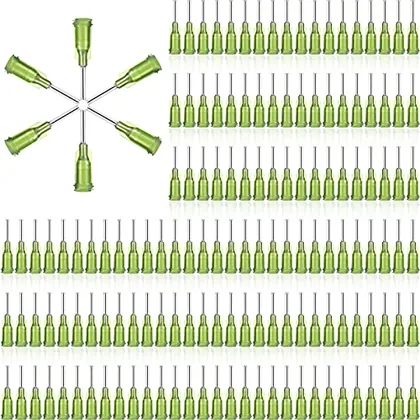
What the rule actually says
The United States has a specific, testable definition rather than a vague warning, and it is worth reading in full before buying for a room with young children in it.
A small part is any object that fits, without compressing and in any orientation, entirely into the small parts cylinder (see Figure 1 at 16 C.F.R. § 1501.4), which approximates the size of the fully expanded throat of a child under three years old.
the U.S. Consumer Product Safety Commission
That cylinder is the whole test. It is not about whether a thing looks small, it is about whether it fits, uncompressed and in any orientation, into a shape that approximates a small child's throat.
Children’s products that are intended for use by children under 3 that present a choking, aspiration, or ingestion hazard because of small parts are banned hazardous substances.
the U.S. Consumer Product Safety Commission
Note the scope: children's products intended for use by children under three. A tagging gun or a badge reel is not a children's product, and the ban does not reach it. That does not make it safe in a nursery, which is the difference between a regulation and a risk assessment.
Why a cylinder and not a size chart
The test is physical rather than dimensional for a reason that is worth understanding: things do not go into a mouth flat. A disc that is wide across and thin can pass into a throat edge first, and a soft item can compress. The rule handles that by describing the shape a small child's throat approximates and asking whether the object fits into it in any orientation at all.
That is also why "it is bigger than a coin" is not a test. Plenty of objects that are visibly larger than a coin will still pass through the cylinder when turned, and plenty of long thin items obviously will.
For a buyer, the practical translation is that judging by eye across a table is unreliable. If a room contains children under three, the safe default is that anything small enough to hold in a closed fist is out until somebody has checked it properly.
Labels, and what they are for
Certain children’s products that are or contain small parts, balloons, small balls, or marbles must be labeled to warn consumers not to buy them for children under a certain age.
the U.S. Consumer Product Safety Commission
The warning label exists because the hazard survives past a child's third birthday. A four-year-old is out of scope of the ban and entirely capable of putting a marble in their mouth, so the label is aimed at the buyer rather than the user.
For anyone buying in bulk for a mixed-age room, the practical rule is simpler than the regulation: sort by age at the point of storage, not at the point of use. Once fifty small objects are loose in a shared box, nobody is checking a label.
The exclusions, and why they surprise people
The small parts ban lists specific exclusions, and reading them is a good corrective to the assumption that any regulation covers everything. Books and other articles made of paper are excluded. So are writing materials such as crayons, chalk, pencils and pens. So are modelling clay, fingerpaints and watercolours.
None of that means those items are harmless in a nursery. It means the ban was written around a specific hazard and specific product categories, and a buyer who reads "excluded" as "safe" has made an error the rule never invited.
| Item type | In scope of the small parts ban? | Still worth thinking about |
|---|---|---|
| Toy intended for under-threes | Yes | The cylinder test is the standard |
| Books and paper articles | Excluded | Torn pieces still end up in mouths |
| Crayons, chalk, pencils, pens | Excluded | Caps and ferrules are the risk, not the pencil |
| Party favours for older children | Depends on the intended age | Mixed-age rooms are where the rule stops helping |
| Office and workshop supplies | Not a children's product | Storage height is the whole control |
Counting them back in
The one genuine advantage of bulk packs in a room with children is that they come with a number on the box. A count that goes out and does not come back is information, and it is the only reliable way to notice that something small is now somewhere on the floor.
The habit that makes it work: open one pack at a time, write the count on the lid, and check the number back at the end of the session rather than trusting a look around the table. Forty-eight out and thirty-one back is a floor sweep, not a shrug.
This is also an argument against decanting party or classroom items into unlabelled tubs. The moment the count leaves the packaging, the check becomes impossible.
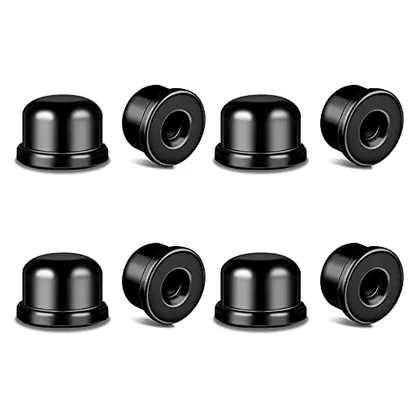
Running the room
Regulation is a floor. What a room needs is a set of habits that survive a busy afternoon.
- Buy by age band, store by age band. One shelf per band, and nothing shared between them.
- Open one pack at a time. The count on the box is also a way of noticing that forty-eight went out and thirty-one came back.
- Sweep by hand, not by eye. Small parts end up under things.
- Keep the packaging until the activity is over. It carries the age marking and the count.
- Treat balloons separately. They are called out by name in the labelling rule for good reason.
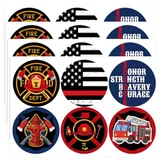
360 Piece Self-Adhesive Assorted Firefighter Sticker Sheet Pack 1.5 Inch Sheet, Red
A typical bulk favour line: the count is the point, and it is also what lets you check that everything that went out came back.
$9.99 $0.03 eachStoring by age band, not by activity
Most rooms store supplies by what they are: craft in one cupboard, party in another. In a room that serves several age groups that is the wrong axis, because the cupboard tells you what an item is for and not who it is safe around.
Sorting by age band instead costs one afternoon and removes an entire class of mistake. One shelf for under-threes, containing only items that cannot pass the cylinder test. One shelf for older children. One for adult-only supplies, high up. The labels do the thinking on the busy day when nobody has time to.
| Shelf | What goes on it | What never does |
|---|---|---|
| Under threes | Large foam and card shapes, chunky wooden pieces, paper craft | Beads, small figures, marbles, balloons, anything with a detachable part |
| Older children | Most party favours, craft kits, safety scissors | Blades, hot tools, adult adhesives |
| Adults only, high up | Craft knives, hot glue, hot knives, pins and needles | Anything a child has a reason to fetch |
The height matters as much as the label. A shelf a four-year-old cannot reach is a control that works when everybody is busy, and a label is not.
Running an activity with small parts in the room
A craft session with beads in a room that also contains a toddler is not by itself a bad idea, but it needs a shape.
- Set the table before the children arrive. Counting out is much easier without an audience.
- Give each place a tray. A raised edge is the difference between a spill on the table and a spill on the floor.
- Keep the pack closed. Put out what the activity needs, not the box.
- End with a sweep, not a glance. Under the table, along the skirting, in the folds of clothes.
- Store the leftovers back in the packaging. That is where the count lives.
None of that is regulation. It is the practical layer that sits on top of it, and it is where most real incidents are actually prevented.
The other half: what to have on hand
Any room that runs activities with small parts and sharp edges needs the dull supplies too. Honoson's first aid and protection shelf carries 26 lines, and the ones that matter in a classroom or a workshop are the least dramatic: blister pads, finger cots, cut-resistant gloves for the person doing the cutting.
This site does not give medical advice and will not start. What it can say is that the supplies are cheap, they are bought before they are needed, and the count on the box is what tells you whether the kit is still stocked.
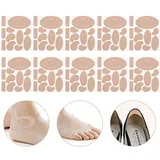
110 Piece Moleskin Adhesive Pads
Bought before it is needed rather than after, which is the only time this kind of item is cheap.
$5.99 $0.06 eachBalloons, and why they are named separately
Balloons appear by name in the labelling requirement rather than being swept up in the general small parts rule, and they are worth treating as their own category in any room with young children. An uninflated balloon and a burst one behave differently from a solid object: the material conforms, which is exactly the property that makes it dangerous.
Two habits that cost nothing: inflate away from small children, and pick up burst pieces immediately rather than at the end. A burst balloon is not litter to sweep later, it is the hazard the rule is about.
The same goes for anything else that changes shape: foam, soft moulded items and small deflated toys. The cylinder test is designed around exactly this problem, and it says so plainly: it specifies "without compressing".
Buying for a mixed-age room
The hardest case is the room that hosts a four-year-old on Tuesday and a toddler on Thursday. The honest answer is that the toddler sets the standard, because the sorting habit that keeps the two apart is the first thing to fail on a busy day.
If that is your room, buy fewer small-part lines and more of the ones that cannot be swallowed: large foam shapes, paper craft, chunky wooden pieces. It is a smaller catalogue and a much simpler afternoon.
What this guide is not
This is a supply catalogue writing about the rules that govern part of what it sells. It is not a safety assessment of any particular product, it is not legal advice, and it is not a substitute for reading the regulation itself, which is short and written in plain language.
Two things follow from that. The first is that every quotation above is reproduced word for word and attributed, so you can follow it back rather than take our word for the paraphrase. The second is that where the range contains items with age markings, those markings are the manufacturer's statement and not ours: we print what a product states and leave out what it does not.
If you are equipping a room that serves under-threes, the sequence that works is: read the CPSC page in full, decide your age bands, then shop. Doing it in that order takes an hour once. Doing it in the other order takes an afternoon of sorting later, and occasionally something worse.
One last note on scope. The rules quoted here are United States federal requirements, and they apply to children's products rather than to everything a room contains. A tagging gun, a badge reel or a box of screws is not a children's product and never was, which is precisely why storage height and adult-only shelves do more work in a mixed room than any regulation can.
Read next
For the arithmetic behind buying any of this in bulk, read buying by the pack without over-buying. For the tools that come out when the activity involves cutting, read hand tools that last.
Every quotation above is listed with its source and the date it was read on the sources page.