Two drawers, two economies
Open any working drawer and you will find two populations living together. There are tools you expect to own in ten years: pliers, a decent screwdriver, tweezers that still meet at the tip. And there are consumables: blades, sanding sticks, glue sticks, cable ties, clips. They look similar in a catalogue. They are bought on completely different logic.
Honoson carries 99 lines in hand tools and 171 in craft and modelling, and the split between keepers and consumables runs straight through both.
Hand and power tools are a common part of our everyday lives and are present in nearly every industry.
the U.S. Occupational Safety and Health Administration
That sentence is worth sitting with, because it explains why this category is so easy to get wrong. Familiar objects do not feel like risks, and a drawer of familiar objects feels like no risk at all.
A test that works in a shop aisle
Before comparing two versions of the same tool, ask three questions in this order.
How often will this be in my hand? Daily, weekly, or twice a year. Daily use justifies almost any sensible spend, because the cost is spread over thousands of uses and the discomfort of a bad one is paid every day. Twice a year does not.
What happens when it fails? A blade that fails cuts you. A cheap organiser that fails spills a drawer. Those are not the same risk, and the first deserves the better version even if it is used rarely.
Is the failure gradual or sudden? Abrasives fade, which you notice. Plastic handles snap, which you do not. Anything that fails suddenly under force is worth buying once, properly.
Those three questions sort almost every line in this range into keep or consume without any further thought.
What actually wears out
Consumables in this range fall into four groups, and each has a tell.
| Consumable | How it fails | Buy in |
|---|---|---|
| Abrasives (sanding sticks, pads) | Grit rounds off and the stick stops cutting long before it looks worn | Packs of 20 to 60 |
| Blades and cutters | Edge rolls, then tears instead of cutting, which is when injuries happen | Packs, and change early |
| Adhesives | Sets in the tube or goes brittle in the joint | Small packs, dated |
| Fasteners and clips | They do not fail, they vanish | The biggest sensible pack |
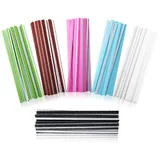
120 Piece Sanding Twigs Cushioned Abrasive Sanding Sticks
Abrasives are the clearest consumable in the range: bought by the pack, used until they stop cutting, replaced without ceremony.
$16.99 $0.15 eachThe last row is the one people get right by instinct and the second row is the one they get wrong. A dull blade feels thrifty and is the most dangerous object on the bench.
The safety part, in the words of the people who publish it
This is where a supply catalogue should stop talking and quote.
However, these simple tools can be hazardous and have the potential for causing severe injuries when used or maintained improperly.
the U.S. Occupational Safety and Health Administration
Two words in that sentence carry the weight: maintained and improperly. Most hand tool injuries are not exotic. They come from a blade that should have been changed, a screwdriver used as a chisel, or a tool that was fine until somebody put it away wet.
The practical translation for a drawer of the kind this range serves:
- Change blades on a schedule rather than on a feeling.
- Use the tool for the job it was made for. A screwdriver is not a pry bar and a craft knife is not a saw.
- Keep blades covered in storage, not loose among fingers.
- Throw away the tool that has started to slip. It will not improve.
Why tools come in counts at all
It looks odd at first that a supply catalogue sells screwdrivers in tens and tweezers in sixes. There are three good reasons and one bad one.
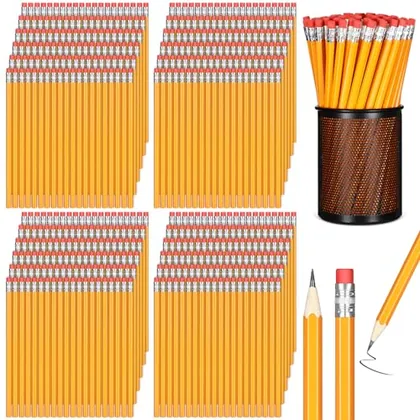
The good ones: a shared workshop needs a tool at each station, and a tool that lives in a place gets returned to it. Small tools are lost rather than broken, so the pack is really a spares kit. And a set of one shape in several sizes is a single purchase decision rather than five.
The bad one: a multipack can be a way to sell one usable tool with four of the wrong size attached. The defence is the specification, not the photograph. A pack that lists its sizes is a set. A pack that says "assorted" and shows a fan of colours may be a set or may be padding, and where it does not say, this site does not either.
| Pack of | Usually means | Worth checking |
|---|---|---|
| One tool, several sizes | A real set | Are the sizes listed |
| Several of one size | Stations or spares | Do you have that many places to put them |
| Assorted colours, one size | Identification, not variety | Whether colour matters to you at all |
| Tool plus consumables | A starter kit | The count of the consumable, which is the part that runs out |
Why repetitive work needs different tools
There is a second kind of harm that a catalogue rarely mentions, because it arrives slowly.
Ergonomics is the design of work tasks to best suit the capabilities of workers.
the National Institute for Occupational Safety and Health
The disorders that field exists to prevent are described plainly by the same source:
Are caused by sudden or sustained force, vibration, repetitive motion, or awkward postures.
the National Institute for Occupational Safety and Health
Every one of those four factors turns up in the work this range supports. Force is a stiff pair of tweezers. Vibration is a cheap rotary tool. Repetitive motion is a thousand price tags. Awkward posture is a badge reel clipped where you have to twist to read it.
NIOSH researchers recommend designing the work environment to fit employees' physical capabilities and limitations.
the National Institute for Occupational Safety and Health
Which, translated into buying, means: for anything you will do a hundred times in an afternoon, buy for the hand rather than for the price. A grip that is one size too small costs nothing on the invoice and everything by four o'clock.
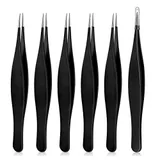
6 Piece Tweezers, Black
Precision work is where grip and tip alignment matter most, and where the cheapest option is most often the wrong one.
$9.99 $1.67 eachReading the material line
Where this range states a material, it is worth reading before the price. Stainless steel and plated steel look identical in a photograph and behave differently after a month in a damp workshop. Plastic covers everything from a rigid moulded body to a flexible grip, and the word alone does not tell you which.
Our materials page counts what the range states, department by department, including how many lines state nothing at all. That last number is the honest part: a catalogue that claimed a material for every line would be inventing most of them.
The economics of a sharp edge
A blade is the clearest case in this whole catalogue of a consumable that people treat as a keeper. Craft knives, box cutters and scissors all arrive sharp, dull steadily, and reach a point where they need more force to do the same job. More force is the entire problem: it is what turns a slip into an injury and a straight cut into a torn one.
Blades in this range come in packs precisely because they are meant to be changed. The cost of changing one early is a few cents. The cost of changing one late is measured in plasters and ruined work.
A workable habit is to change on a schedule rather than on a judgement: at the start of a project, after any cut through adhesive or tape, and the moment the tool needs a second pass. None of those require deciding whether the blade is "still fine", which is the judgement everybody gets wrong.
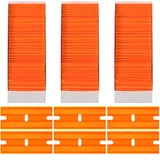
600 Piece Plastic Razor Blade Scraper Blades Plastic Scraper Tools, Orange
Blades are bought by the pack because they are supposed to be changed early, not sharpened late.
$25.99 $0.05 eachStorage is part of the tool
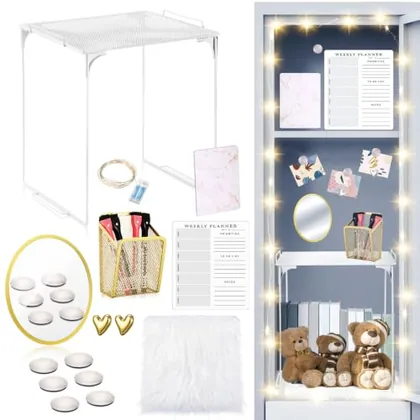
A tool kept loose in a drawer is a tool that gets damaged by the other tools. The cheapest fix in this catalogue is a set of organisers, and the second cheapest is a habit: consumables in one place, keepers in another, edges covered.
- Keep abrasives away from anything with a finish. Grit travels.
- Store blades in their original packet, which is also where the count is printed.
- Do not store adhesives with tools you care about.
- Give the tools you actually reach for the shallowest drawer.
Where cheap is fine and where it is not
Nothing in this guide argues for buying the expensive version of everything. Most of a working drawer can be cheap without consequence, and pretending otherwise is how people end up with a hundred dollars of tools they use twice.
| Buy cheap | Buy once, properly |
|---|---|
| Clips, ties, fasteners | Anything with a blade you push |
| Storage boxes and organisers | The tool you hold for an hour at a time |
| Abrasives and consumables | Anything that grips a fastener you cannot replace |
| Spare tweezers for a shared bench | The tweezers you do fine work with |
| Marking and measuring aids | Anything that fails under load |
The pattern in the right column is force and its consequences. A tool that fails while you are pushing it fails towards your hand, and that is the whole argument for spending on the small number of items where that is true.
The pattern in the left column is loss. Items that disappear rather than break should be bought in the counts that make disappearance boring.
A sensible buying order
If you are equipping from nothing, the order that wastes the least money is: the two or three tools you will use daily, then the consumables for the first month, then storage, then the specialist tool you think you might need.
The last item is last for a reason. The specialist tool bought in advance is the one that stays in its packet, and the one bought when the job appears is the one that gets used for years.
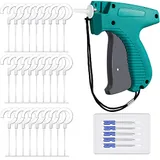
2006 Piece Tagging Guns, Blue
A daily-use example: small, magnetic, and the sort of thing that ends up in a pocket rather than a drawer.
$21.99 $0.02 eachWhen the set is the right answer and when it is not
Buying a set of ten of something you use once a month is not thrift, it is a decision to store nine of them. Buying a set of ten of something a shared bench loses weekly is exactly right.
The distinction is consumption rate, and it is easy to estimate honestly: think back over the last six months and count how many times you reached for the thing. If the answer is under five, buy one good one. If it is over twenty, buy the pack and stop thinking about it.
Where a bench is shared, add a rule that has nothing to do with buying: the tool lives in a named place. A pack of ten that ends up scattered is a pack of one, nine times over.
The checklist
- Decide whether the item is a keeper or a consumable before comparing prices.
- For consumables, buy the pack. For keepers, buy the one that fits your hand.
- Change blades early.
- Read the material line, and notice when there is not one.
- Store blades covered and abrasives apart.
- Buy the specialist tool when the job arrives, not before.
Read next
The companion guides are buying by the pack without over-buying, which is the arithmetic behind every consumable decision above, and small parts in a big room, which matters the moment a workshop shares a building with children.
Shelves: hand tools, craft and modelling, first aid and protection.